
As environmental issues like climate change and resource depletion take center stage, the construction industry finds itself at a pivotal moment. With growing expectations from consumers, regulators, and investors, builders are reevaluating traditional methods and embracing more sustainable practices. From initial planning to final execution, the goal is clear: build responsibly without compromising on quality or cost-efficiency.
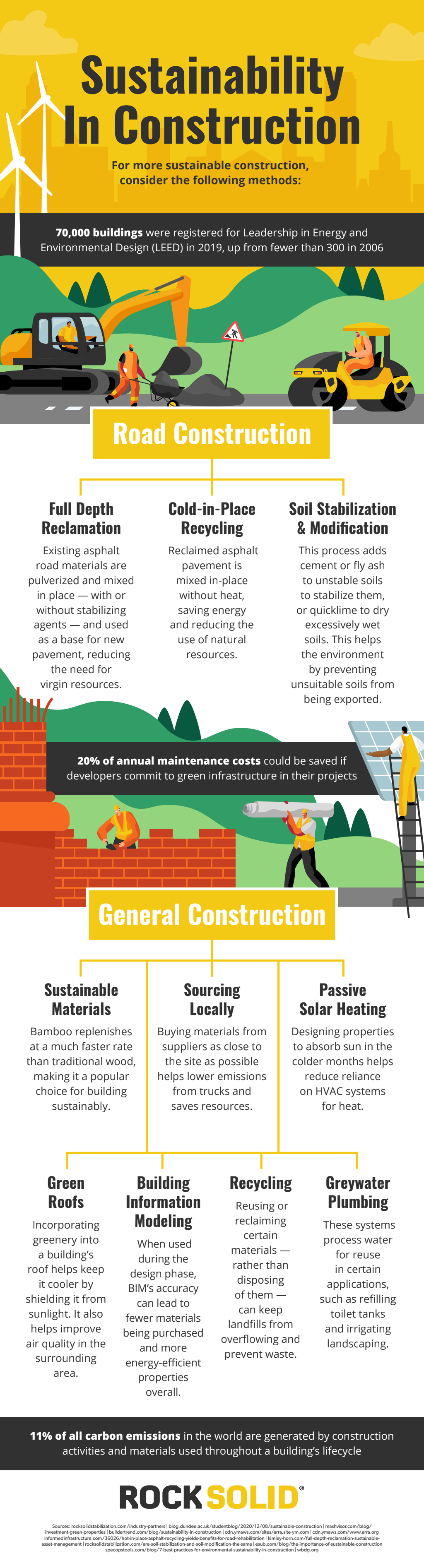
Construction is a significant contributor to carbon emissions — roughly 11% of global emissions are linked to the building process and material lifecycle. With that in mind, industry professionals are rethinking how structures are designed, sourced, and constructed to align with evolving environmental priorities.
Greener Groundwork: Making Infrastructure More Efficient
Road building and site development have long been resource-intensive endeavors. But new strategies are reducing their environmental burden. Take full depth reclamation, for example — this method recycles existing asphalt by pulverizing and reusing it as a base layer, minimizing the need for raw materials and reducing disposal and transport costs.
Another eco-conscious technique, Cold-in-Place Recycling, allows asphalt to be reused without applying heat, leading to significant energy savings. Meanwhile, soil stabilization methods like adding fly ash, lime, or cement make otherwise unusable earth suitable for foundational support. The result? Less need for new fill, fewer vehicle trips, and better site efficiency overall.
Building Materials That Reflect Better Values
Material selection plays a critical role in sustainable construction. Renewable resources like bamboo are replacing traditional lumber thanks to their quick regrowth and durability. Additionally, sourcing materials locally shortens delivery routes, cuts emissions, and supports regional suppliers.
Design-wise, features such as green roofs are gaining traction, helping reduce urban heat, manage stormwater, and boost insulation. Passive solar design is another popular choice, leveraging a building’s orientation and layout to naturally heat interiors during cooler months — minimizing reliance on mechanical systems.
Behind the scenes, Building Information Modeling (BIM) tools are transforming the planning phase. With BIM, teams can better forecast material usage, coordinate timelines, and reduce excess before a single nail is driven.
Reducing Waste and Conserving Water
Water and waste management are major areas for improvement in sustainable construction. Greywater systems are becoming more common — recycling used water from sinks or showers for landscaping or flushing toilets. This helps preserve freshwater resources and reduces the strain on municipal infrastructure.
Construction waste, too, is being handled more thoughtfully. Reclaimed wood, metal, and concrete are being salvaged and reused whenever possible. These efforts not only limit landfill contributions but also reduce costs associated with sourcing new materials.
Why Sustainability Makes Business Sense
Beyond its environmental benefits, sustainable construction offers financial advantages as well. Green infrastructure has been shown to cut yearly maintenance costs by up to 20%. For developers and property owners, that’s a compelling reason to make long-term investments in greener solutions.
Market demand supports this shift. LEED certifications and other green building standards are on the rise, signaling that buyers and tenants increasingly value sustainability. In fact, more than 70,000 projects applied for LEED registration in 2019 alone — up from just a few hundred in 2006.
Conclusion: A New Standard in Construction
Sustainable building isn’t just a forward-thinking ideal — it’s quickly becoming the new baseline. Whether it’s through smarter site prep, responsible material sourcing, or energy-conscious design, construction professionals are helping shape a more environmentally sound future.
By adopting these approaches, developers aren’t just reducing their environmental impact. They’re also building with greater resilience, securing long-term value, and responding to a market that expects more from the spaces we inhabit. In today’s world, the most successful builders are the ones leading with sustainability — and proving that progress and responsibility can go hand in hand. For more details on this, check out the accompanying resource from Rock Solid Stabilization & Reclamation, full depth reclamation contractors.